

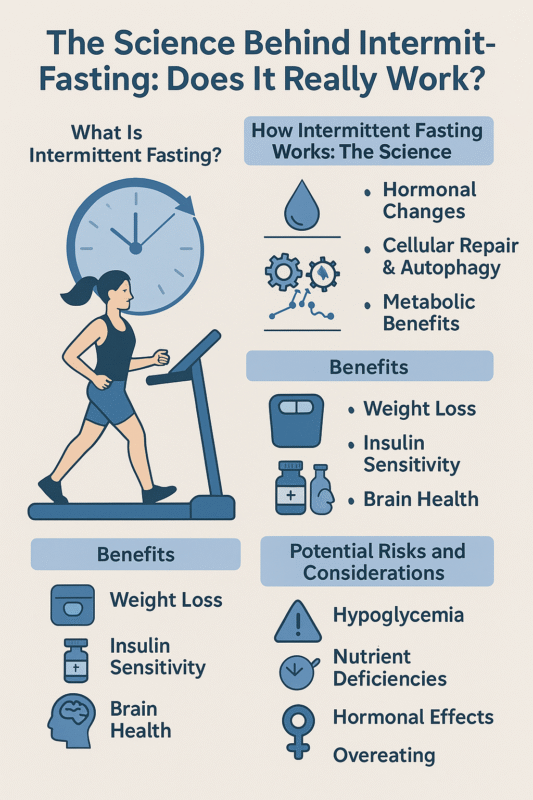
Intermittent fasting (IF) has gained significant popularity over the past decade, being praised as a strategy to lose weight, boost energy, and enhance overall health. But beyond the hype, does science truly support these claims?
A 2023 review in The New England Journal of Medicine highlights that intermittent fasting can improve metabolic health, but outcomes vary depending on fasting method, lifestyle, and individual physiology.
Understanding the science behind IF is crucial for anyone considering it as a health or productivity strategy. This article explores the mechanisms, benefits, risks, and practical advice based on credible research.
What Is Intermittent Fasting?
Intermittent fasting isn’t about restricting calories outright—it’s about when you eat. Common approaches include:
- 16:8 Method: 16 hours of fasting with an 8-hour eating window.
- 5:2 Diet: Eating normally five days a week, reducing calories drastically for two days.
- Alternate-Day Fasting: Fasting every other day, often with 500–600 calories allowed on fasting days.
- Time-Restricted Eating: Aligning meals with circadian rhythms, such as eating only during daylight hours.
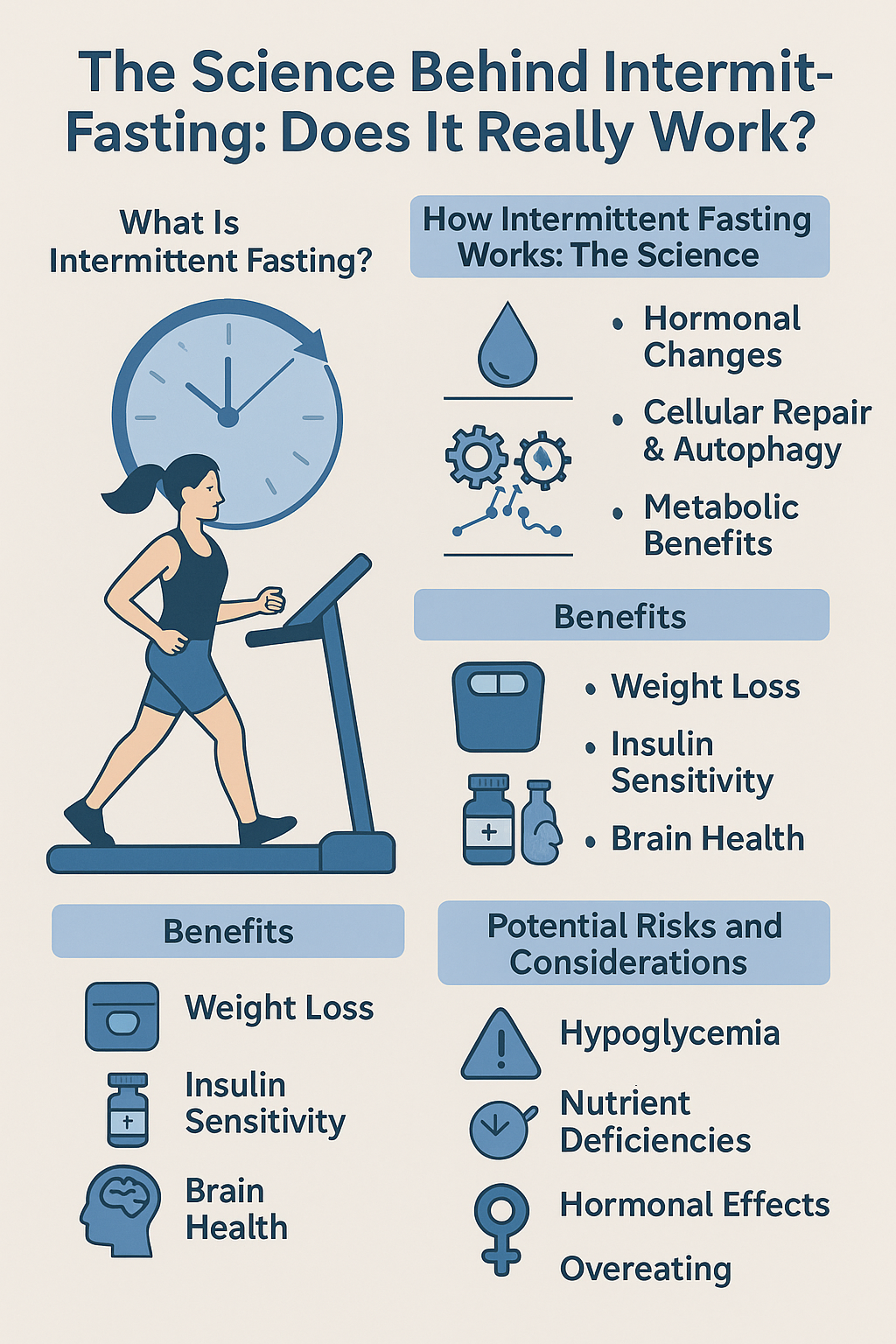
Key principle: The body alternates between a fed state (when energy is derived from food) and a fasted state (when energy is derived from stored fat), triggering hormonal and metabolic responses.
How Intermittent Fasting Works: The Science
1. Hormonal Changes
Fasting initiates multiple hormonal shifts:
- Insulin levels drop: Lower insulin enhances fat burning (Journal of Clinical Endocrinology, 2022).
- Human Growth Hormone (HGH) rises: Supports fat loss and muscle preservation.
- Norepinephrine increases: Boosts metabolism and energy mobilization, helping the body burn fat more efficiently.
These hormonal changes are central to why intermittent fasting may be effective for fat loss and metabolic health.
2. Cellular Repair & Autophagy
Fasting stimulates autophagy, a process where cells remove damaged components. It has implications for:
- Longevity: Healthy cells may reduce the risk of age-related diseases.
- Brain health: Autophagy may protect neurons and improve cognitive resilience (Cell Metabolism, 2021).
- Disease prevention: Evidence suggests benefits for metabolic disorders and cardiovascular health.
3. Metabolic Benefits
Intermittent fasting can influence metabolism in multiple ways:
- Improved insulin sensitivity: Helps regulate blood sugar levels.
- Cholesterol reduction: Some studies report reductions in LDL cholesterol and triglycerides.
- Weight management: Periodic fasting may promote fat loss without extreme calorie restriction.
Scientific Evidence: Does It Really Work?
Weight Loss & Fat Reduction
- A meta-analysis in Obesity Reviews (2020) found IF resulted in an average 3–8% body weight reduction over 3–12 weeks.
- Fat loss is often concentrated in the abdominal region, linked to lower cardiovascular risk.
- Compared to continuous calorie restriction, intermittent fasting is equally or sometimes more effective for fat loss and body composition improvements.
Metabolic Health
- IF can lower fasting blood glucose by 3–6% and insulin levels by 20–31%.
- Evidence suggests intermittent fasting may reduce inflammation markers, improve lipid profiles, and support heart health.
- Long-term cardiovascular benefits are promising but require more high-quality, randomized controlled trials.
Brain Health
- Animal studies indicate IF may enhance memory and reduce age-related cognitive decline.
- Human trials suggest intermittent fasting may improve mental clarity and stress resilience, though more research is needed.
- Possible mechanism: increased production of brain-derived neurotrophic factor (BDNF), which supports neuron growth.
Longevity and Disease Prevention
- Some evidence links IF to longer lifespan in animals, likely through improved metabolic efficiency and reduced oxidative stress.
- Research is exploring its role in reducing the risks of diabetes, obesity, neurodegeneration, and some cancers.
Potential Risks and Considerations
Despite its benefits, IF isn’t suitable for everyone:
- Hypoglycemia risk: Particularly for those with diabetes on medication.
- Nutrient deficiencies: Extreme calorie reduction may limit vitamins and minerals.
- Hormonal disruptions: Women may experience menstrual irregularities or fertility changes.
- Overeating during eating windows can negate calorie deficits.
- Energy dips: Fatigue or irritability may occur, especially during early adaptation.
Tip: Consultation with a healthcare provider is recommended before starting intermittent fasting, especially for people with underlying medical conditions.
Practical Tips for Success
- Start gradually: Begin with a 12-hour fasting window and then gradually extend it.
- Stay hydrated: Water, black coffee, or herbal teas help manage hunger.
- Eat nutrient-dense meals: Include protein, fiber, and healthy fats to sustain energy.
- Listen to your body: Track energy, mood, and weight to adjust the fasting schedule.
- Combine with exercise: Strength training and cardio enhance fat loss and muscle preservation.
- Consistency over perfection: Long-term adherence matters more than occasional lapses.
FAQ: Common Questions About Intermittent Fasting
Q1: Can I drink coffee or tea while fasting?
Yes. Black coffee, tea, and water are typically allowed. Avoid adding sugar or cream, which can break the fast.
Q2: Will intermittent fasting slow my metabolism?
Short-term fasting does not appear to slow metabolism. In fact, it can increase metabolic rate slightly due to hormonal changes like elevated norepinephrine.
Q3: Is intermittent fasting safe for women?
Many women benefit from IF, but some may experience menstrual irregularities or fertility changes. Starting gradually and consulting a healthcare provider is advised.
Q4: How long will it take to see results?
Weight loss and improved insulin sensitivity may be noticeable within 2–4 weeks, although individual results vary. Consistency and balanced nutrition are key.
Conclusion
Intermittent fasting is supported by scientific evidence as a practical approach for weight management, improving metabolic health, and promoting longevity. Its success depends on individual physiology, lifestyle, and adherence to the treatment regimen. While promising, IF is not a one-size-fits-all solution and should be paired with balanced nutrition and regular exercise.
For those interested in integrating intermittent fasting into daily life, starting slowly, monitoring results, and consulting a healthcare professional maximizes benefits while minimizing risks.
Call to Action:
Stay informed with evidence-based health strategies by exploring more insights at AI Tech Muz and discover approaches that genuinely work.



Leave feedback about this